

by Dwight Alleyne
Is your dog or cat suddenly shaking their head? Are they scratching at their ears, or are they looking red? Your furry friend may have an ear infection. Certain factors can upset the balance of the ear environment. But what causes ear infections in cats and dogs exactly? Let’s get into that and some common treatments because it helps to know how you can prevent these from recurring in your pet.
Yeast Overgrowth is the Enemy
Yeast naturally resides in the environment or microbiome of the ears and skin. Certain factors in your pet’s microbiome help regulate yeast growth to create a healthy balance in the ear. But that balance can be disrupted when underlying factors cause inflammation in the ear. Inflammation can then cause swelling and the glands to over-secrete. This process leads to a moist environment in the ear canal. And because yeast thrives in a dark, moist environment, yeast overgrowth ensues. Overgrowth leads to dark brown discharge, an unpleasant odor and scratching at the ears.
Environmental Allergies’ Role in Ear Yeast Infections
Several underlying conditions can cause an imbalance in the skin microbiome and lead to yeast overgrowth. Allergies are one of them, and skin allergies are among the most common causes of ear yeast infection in dogs and cats. Your pets can be allergic to things in the environment, food or a combination of both. Exposure to an allergen causes redness, swelling and increased secretion of the skin glands.
Parasites’ Role in Ear Yeast Infections
Ear mites are the most common parasite that can contribute to yeast infections. Even though they can occur in dogs, they most commonly occur in cats. These tiny insects like to live and reproduce in the ear canal, causing significant irritation and inflammation. This disrupts the delicate balance of the ear canal’s microbiome.
Anatomy of the Ear and Other Contributors to Ear Yeast Infections
This is more likely to affect dogs than cats. Dogs with floppy ears or a lot of hair around or in their ears can be predisposed to ear yeast infections. Those floppy ears (cute as they are!) that aren’t well ventilated and are extra hairy can trap moisture, a condition that’s favorable for yeast overgrowth. Pets who are frequent swimmers can also be more prone to ear infections because of the constant exposure to moisture.
Best Way To Treat an Ear Yeast Infection
To effectively treat your pet’s ear infection, find out what is disrupting the environment of the ear. Your veterinarian can perform tests using the discharge from the ears to confirm an infection. An ear swab cytology test can help determine if there are ear mites, yeast or a bacterial infection present. Based on those results, the appropriate treatment can be administered.
Restore the Microbiome
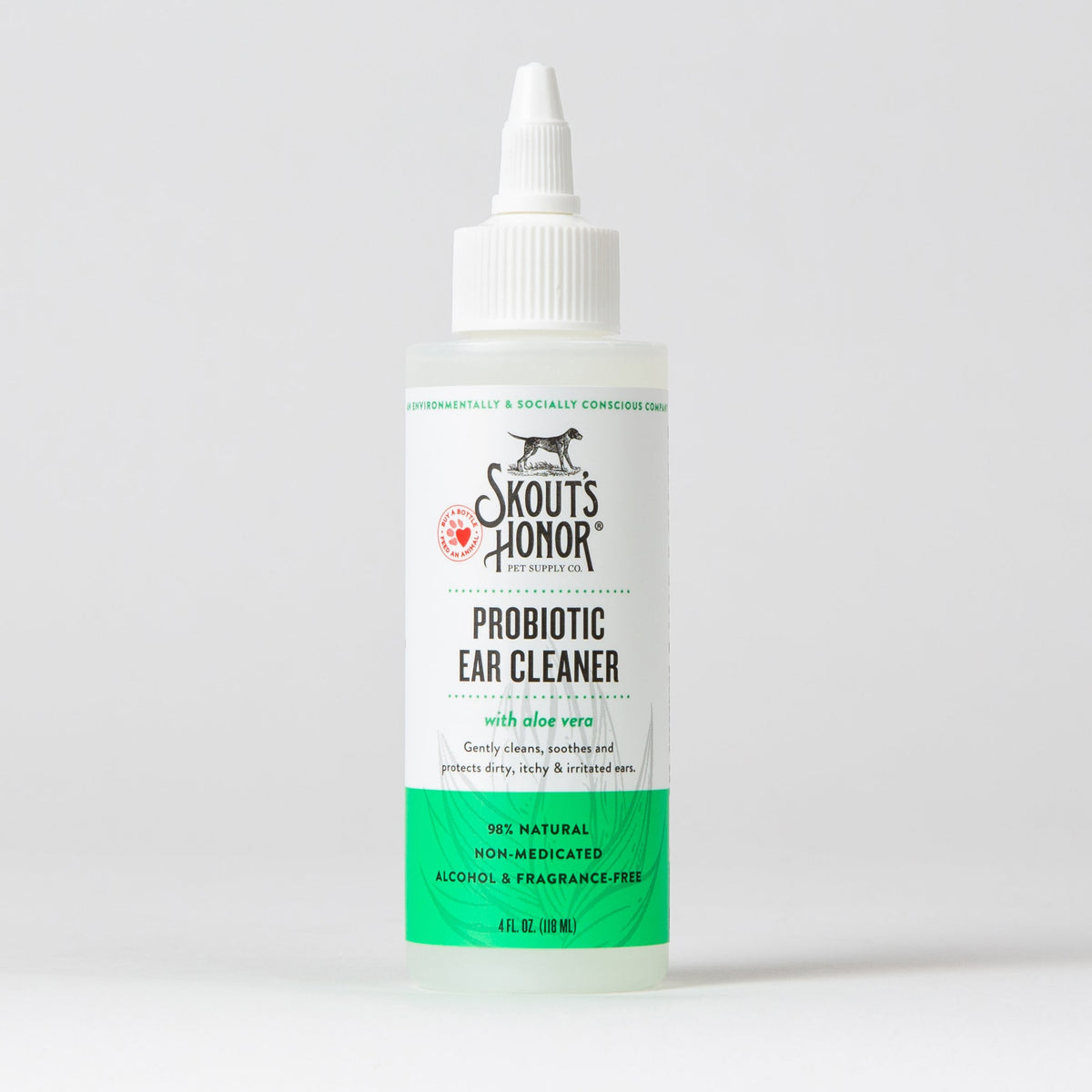
This is an essential part of holistic treatment, since there is an imbalance within the ear promoting yeast overgrowth. A product that can help restore the microbiome and prevent further growth of yeast is needed for short- and long-term care. Fortunately, Skout’s Honor’s probiotic line is scientifically-proven by third-party testing to stop and prevent the overgrowth of yeast. The Probiotic Ear Cleaner for dogs and cats is here to give your pet relief. It’s also great to use for maintenance to prevent a recurrence. Learn more about the full probiotics line here.
What Have You Learned About Ear Yeast Infections?
Ear yeast infections can be managed and prevented when you restore balance to the microbiome. Having Skout’s Honor probiotic products in your arsenal can help maintain this balance. If you notice an ear issue with your cat or dog, let your veterinarian confirm that there’s an infection and treat it appropriately. Then make sure you get your hands on our probiotics to help prevent future infections.
A few more questions we get
Can I use a regular ear cleaner if my dog has an ear infection? Not before talking to your vet. VCA advises checking first on red, inflamed or painful ears, since it could be an infection or a ruptured eardrum. Cleaning can also interfere with medication timing, because discharge and wax can inactivate topical drugs and some cleaners weaken them.
Can you clean a dog's ears too much? Yes. VCA says over-cleaning can irritate the canal, which can lead to infection, and that some dogs with healthy ears never need it. Cornell makes the same point.
Is hydrogen peroxide safe for dog ears? No. VCA notes peroxide and alcohol can irritate the canal, especially an inflamed one. Merck also warns off home remedies like vinegar, which can worsen swelling and raise infection risk.
Why do my dog's ears still smell after I clean them? Odor is on Cornell's list of possible infection signs. If a cleaning does not clear the smell, or it comes back fast, get the ear looked at rather than cleaning more often.
What does microbiome-friendly actually mean on an ear cleaner? That the formula has been tested for its effect on the skin's natural microbial community. It matters because research found less bacterial variety in otitis-affected ears than healthy ones, often with one organism overgrowing. Look for independent validation like MyMicrobiome certification, not just the phrase on a label.
Dr. Dwight Alleyne is a veterinarian who has over a decade of experience treating cats and dogs. He is also the creator of the Animal Doctor Blog, where he provides general health advice and pet product reviews.
References:
Today’s Veterinary Nurse - Ear Cytology: Sampling, Processing, and Microscopic Evaluation
Fetch by WebMD - Yeast Infection in Dogs’ Ears: Causes, Treatment, and Prevention
Veterinary Partner - Ear Infection (Yeast Otitis) in Dogs

Pet Horoscopes: Gemini Season Brings Mercury Retrograde Along With It
How To Get Rid of Fleas on Dogs Naturally